
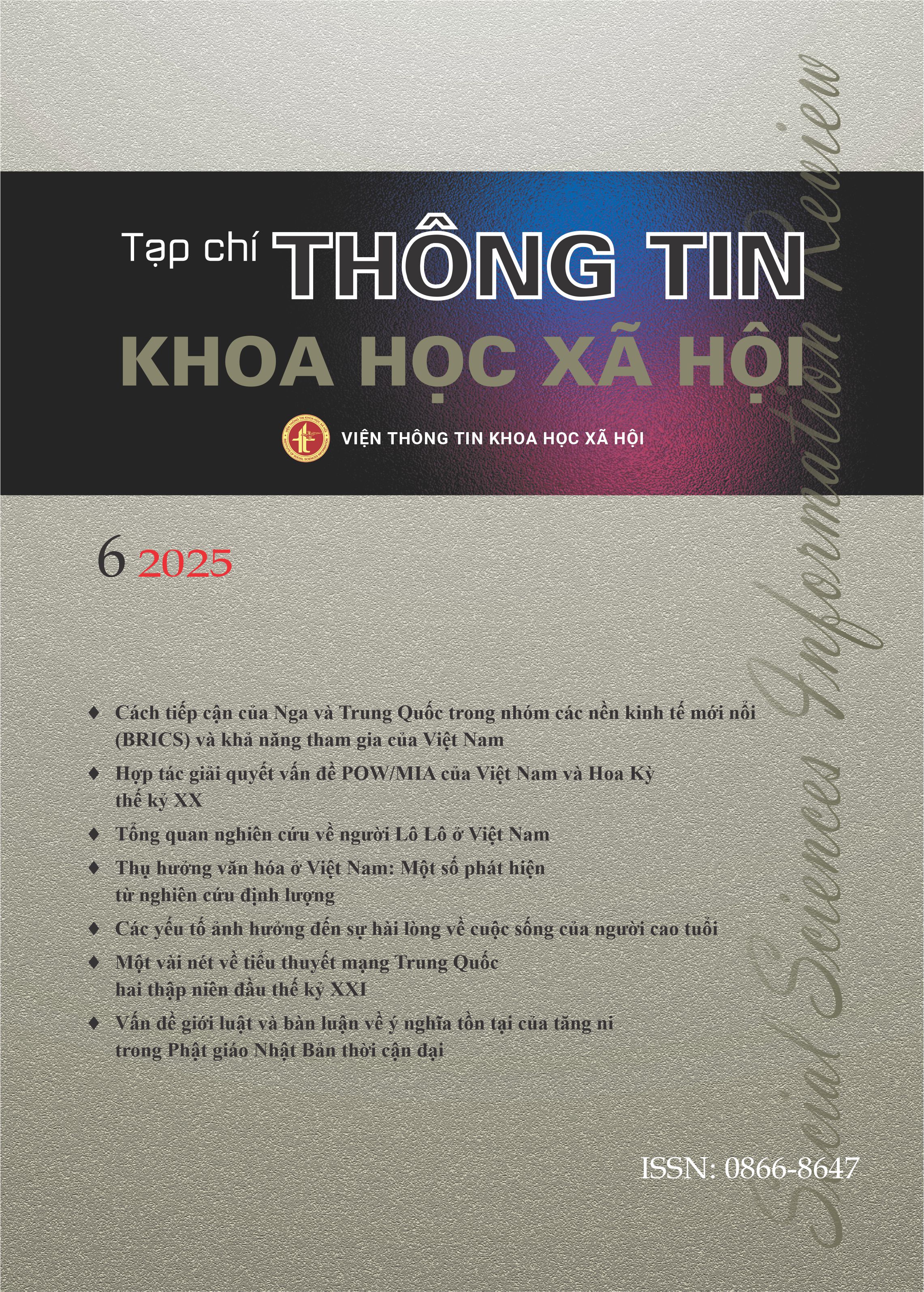
The Issue of Precepts and Discussion on the Significance of the Existence of Monks and Nuns in Early Modern Japanese Buddhism
Keywords:
, , , ,Abstract
In the late Edo-early Meiji period, Japan witnessed major political, economic, social, and cultural changes. In that context, Buddhists were forced to accept new government policies including the separation of Shinto and Buddhism, unification of religious practices. In particular, the most shocking regulations for Buddhists were Proclamation No. 133 issued in the 5th year of Meiji (1872) and Proclamation No. 26 issued in the 6th year of Meiji (1873), which clearly stated that monks and nuns could freely live like lay people. These regulations have caused confusion among Japanese Buddhist monks and nuns, as well as division in their views on the precepts and the meaning of the existence of monks and nuns in the new era. Through the analysis of the theories of contemporary Buddhist monks and nuns, the article clarifies the situation and new views on the precepts and the meaning of the existence of monks and nuns as a driving force for reforming Buddhism during that time.
Downloads
Published
Issue
Section
License
Tác giả xuất bản bài viết của mình trên tạp chí này đồng ý với những điều khoản sau:- Tác giả vẫn giữ bản quyền và trao cho tạp chí quyền xuất bản lần đầu tiên và sau [số tháng] phát hành tác phẩm theo giấy phép Creative Commons Attribution Licensecho phép những người khác chia sẻ tác phẩm đó với điều kiện nêu rõ tác giả và nơi xuất bản đầu tiên.
- Tác giả có thể ký kết những thỏa thuận riêng rẻ khác mang tính hợp đồng đối với việc phát hành không độc quyền phiên bản của tác phẩm in trên tạp chí này (v.d., đưa vào một kho dữ liệu của một cơ quan hoặc đưa vào một cuốn sách), với điều kiện nêu rõ nơi xuất bản đầu tiên.
- Tác giả được phép và được khuyến khích đưa bài viết của mình lên mạng (v.d., trong các kho dữ liệu cơ quan hoặc website của tác giả) trước và trong quá trình nộp bài viết vì nó có thể đưa lại những trao đổi hiệu quả cũng như giúp tác phẩm có nhiều địa chỉ trích dẫn hơn (Xem Hiệu lực của Truy cập Tự do).
